In the last few weeks, I’ve had the distinct pleasure of watching history being made twice from the comfort of my living room. The first was on April 1st, when we watched four astronauts blast off on a moon mission for the first time, and the second was last Friday, April 10th, when the Integrity capsule crashed into the pacific ocean. My wife and I held our breaths and sighed a sigh of collective relief as they broke out of the atmosphere and when they re-established communications as the parachutes began to deploy. My five year old, reveling in a chance to stay up late and eat ice cream, chanted ‘staaaay allliiiive’ over and over for minutes and cheered as they touched down into the ocean.
At random moments throughout that ten day period, I found myself occasionally buoyed by a sense of joy and… well, wholeness that filled me. I’d check the news during a lunch break and see photos from the dark side of the moon. I got emotional as the astronaut crew gathered named one of the landmarks Carroll after Commander Wiseman’s wife who died of cancer, hugging each other in a scene of true humanity that took place thousands and thousands of miles away. I laughed at the Nutella mishap, I enjoyed watching interviews with the ground crew who had cheered and clapped when mission goals were met, and I adored watching C-Span, of all things, as they took questions from kids about space during the lead up to the launch and splashdown.
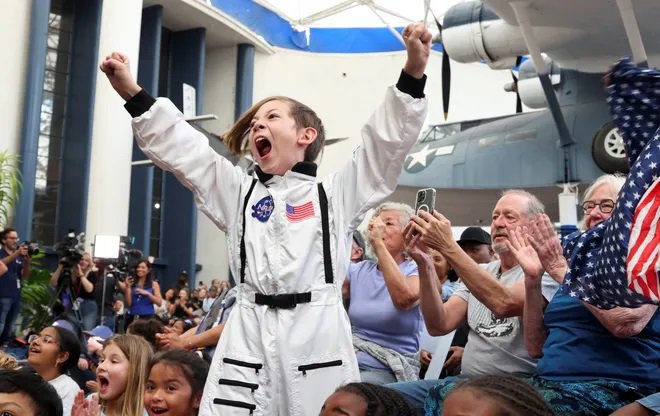
An amazing image taken by Sandy Huffaker of a celebration in San Diego as the Artemis II touched down.
I say all this to ask a simple question: why did all of this bring me such joy? While the world feels like it’s falling apart, why did the Artemis II mission bring me such solace? Why was it such a good break from the day to day trials of 2026… and why is one of the only other things that managed this feat recently was digging a hole in a zombie survival game?
A Rant About Those Who Divide
A lot of modernity is set up to feel like a competition. Sports naturally come to mind, but I don’t think that encapsulates the systemic sense of isolation that’s grabbed hold of most people in America. Political talk shows talk about who wins and who loses more than what content an actual piece of legislation holds. Television has been morphing for decades into reality TV shows that remind you every few minutes ‘there can only be one winner’. Economists and influencers who want you to buy into crypto constantly use language like “ buy in now and don’t miss out like the rest”.
We aren’t immune to this in gaming. Something that I’ve absolutely come to hate is seeing the trend of reading video game player-count statistics like they are tea leaves become more and more popular. There’s been a culture of cynical sarcasm for decades in gaming, tracing back to journalists and gamer forums making mockery of E3 presentations and maybe even the ‘console wars’ between Nintendo and Sega. Sure, you have moments like the classic video making fun of the PS3 launch, but with the popularization of twitch live chats and pile ons, this metastasized into something darker. Try logging into any official Video Game Awards or Summer Game Fest stream and its just thousands upon thousands of trolling messages, many eager to tear down any game besides the one they are there for.
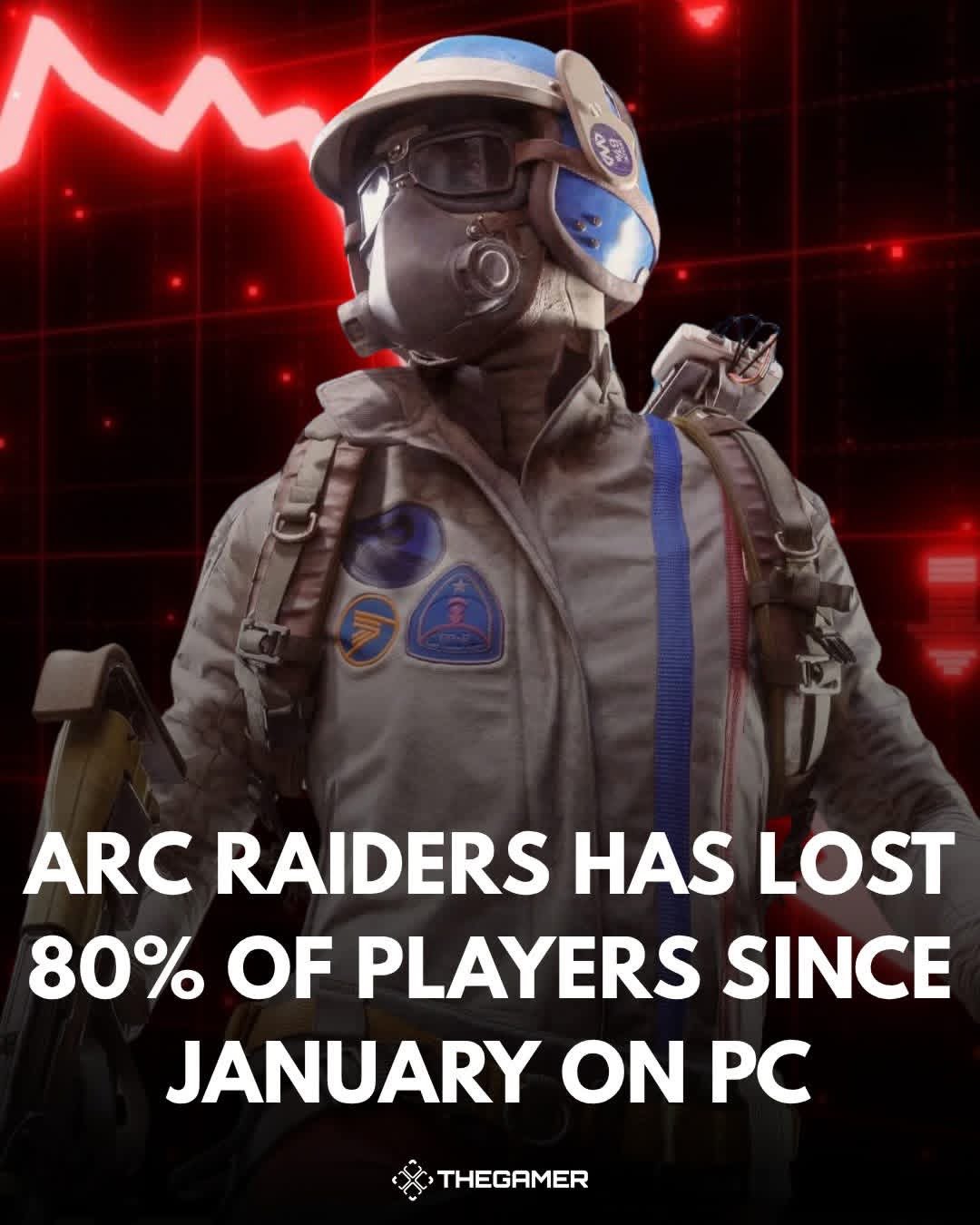
Scrolling social media makes you run across images like this all the time now. Some days, it really feels like we are spending more time looking for games to tear down instead of celebrating the act of gaming. Who does that help?
When Concord went live in August of 2024, there was a set of reviews and reactions that were… honestly, relatively normal. A new IP hero shooter in a crowded genre, it came out to middling reviews of it being a fine game, but it wasn’t enough to rise above the masses of live-service games already vying for attention. It honestly reminded me of an article one of us wrote back in 2018, commenting on how Lawbreakers and Radical Heights couldn’t succeed just due to market saturation. It was a shame, not a cause for celebration; a lot of hard work that was fumbled. Things pointed to mismanagement of corporate decisions rather than game design.
One month later, Concord was a meme, already shut down, and the company behind it being dismantled. Hundreds of videos and posts mocked its failure, and it could often shift in an ugly way, looking to scapegoat it on ‘woke’ choices and targeting individual game designers. I am in no way saying Concord was a good or bad game - I never played it - but most people never even had a chance. It’s now common practice to watch a single trailer of a game and declare it is the next Concord, and that expression alone can be enough to start a negative opinion spiral.
In a world where game layoffs are a monthly occurrence, there’s now also a perverse reveling in failure that happens in our community. We’re at the point where online gamers actively go witch hunting, with Highguard being the most recent victim. Again, as someone who never even had the chance to play it, I can’t speak to it directly, but I can say that its death felt forced and unnatural. One bad trailer placement at the end of an awards show shouldn’t be enough to doom a game. I agree with Bricky’s nuanced video on the subject, exploring the games flaws and how it had a lot of market factors riding against it… but becoming a laughing stock before even releasing? Really?
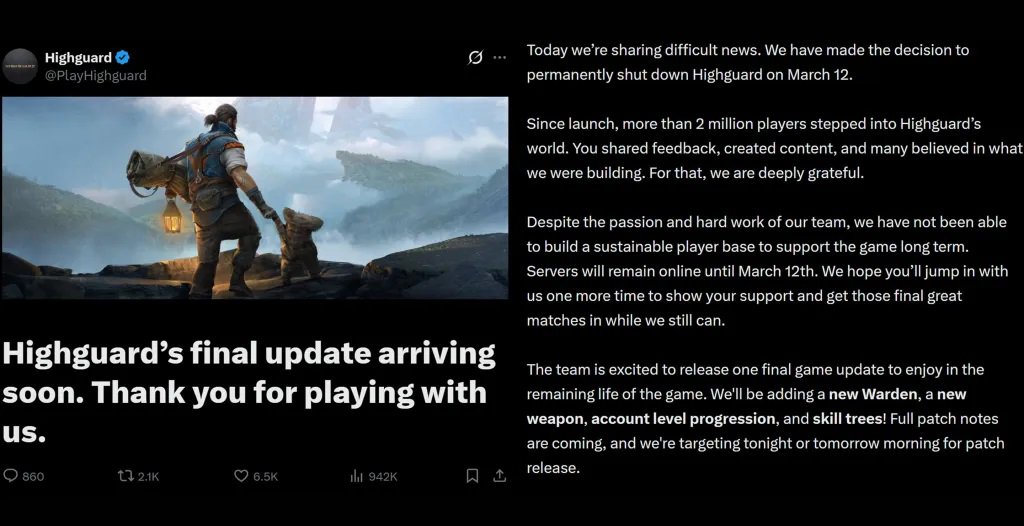
Again, I personally feel like new live service games have been a tough sell for years. Should we use this to mock the game developers or demand better from AAA companies who keep pushing wealth extracting practices? The Highguard debacle didn't feel like an inevitable failure, but exercising communal schadenfreude.
What are we doing here? Why has the community become so filled with spite that we mock a project so derisively it fails, and more game designers give up their dreams of making games? Does this make our community a better place, or just encourage cynicism instead of enjoyment?
The Personal Choice To Fight Other Humans Or Celebrate Humanity
I hate that stories like the one above now feel like the normal interactions you expect when you log online. Social media feeds are filled with people attempting takedowns of others, the news is a constant wall of noise where we hear more about problems than people looking for solutions, and even our sources of entertainment now follow the same pattern, with entire youtube channels dedicated to manufacturing outrage and what you should hate instead of what you should enjoy.
You want to find a Youtube gaming video that’s entirely about joy? Go watch the Stardew Valley 10 year anniversary video that released in February. You can even turn on the live chat replay and watch as Eric Barone recaps years of development and creation on his project and people just cheer. It’s a complete 180 of the attitude find of the live chats I mentioned earlier. People excited to see what new content might be coming, sure, but lots of people just cheering on as Eric recounted how he made this game as an homage to Harvest Moon and the struggles he went through trying to make a better game.
Go look at the cakez video where he cries seeing his 4 year game project succeed, more than he ever expected. Go look at the memes that the fanbase behind No Man’s Sky creates, practically begging Sean Murray and his team at Hello Games to take a break after years and years of free updates to make up for a rough launch back in 2016. Or, if you want to get involved in a personal story, go play a co-operative game with friends.
Let me bring up ARC Raiders again, since it’s relevant on both sides of the coin. For most of April, much of what I’ve seen through ambient media are clickbait images crowing that this game is about to die. They are based off steam database info that lauds how this game broke over 480,000 concurrent players when it released, and now that 5+ months later daily concurrent uses is dropping under 100,000… that it’s a dead game. Clicking into the comments is fascinating: arguments reign as people who demand more PvE claim PvP ‘rats’ are destroying it. Others say PvE crybabies are destroying the culture. Others claim… ‘woke’ propaganda, for some reason, without giving evidence.
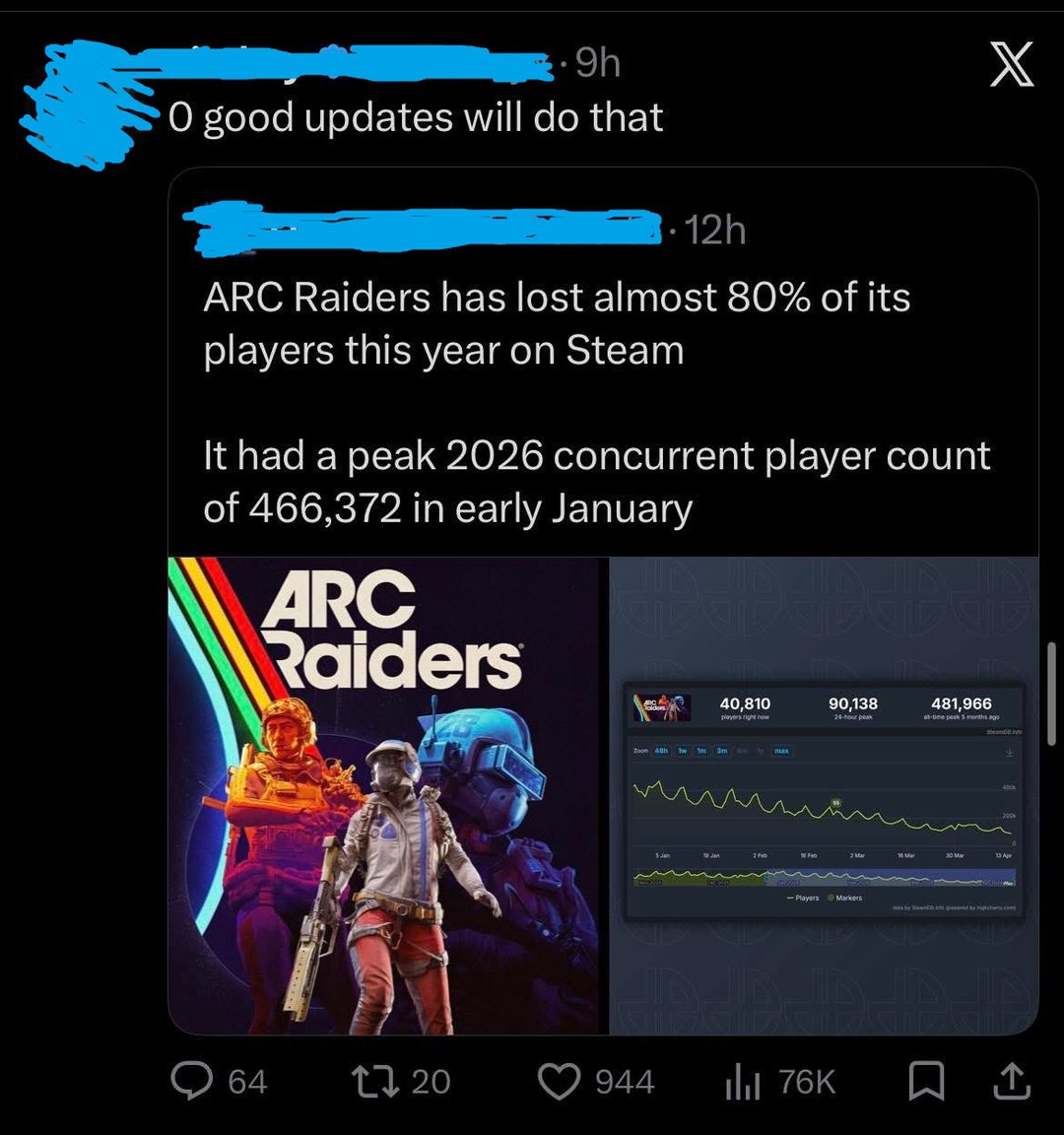
Why do we choose to amplify posts like this instead of stories of how games are fun? Why not put your energy into sharing information about games you like and just let games you don't fall apart naturally?
Surely, less than 100,000 people playing a game at this exact moment on steam is proof that it’s a failure. I mean, as I’m writing this, Expedition 33 is just barely over 10,000 concurrently and Halo: The Master Chief Collection is sitting at 5,982 total current players, and these games have had no cultural relevance whatsoever.
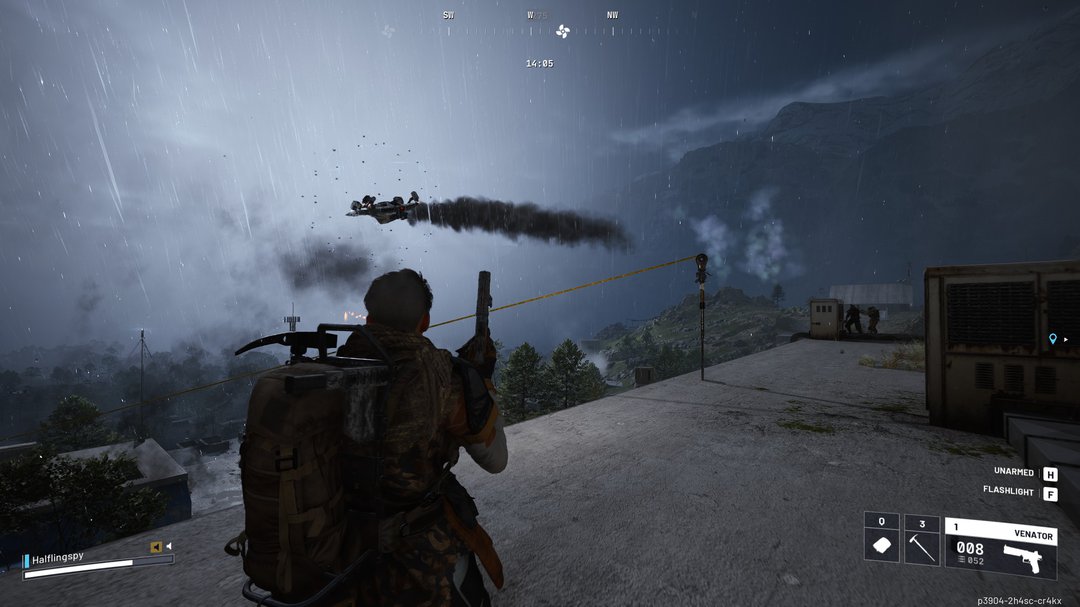
Or, perhaps, we can look at it another way. In this month of April, I’ve gotten back into ARC Raiders after having to stop playing most games in March due to family health issues. There’s a new event called “Close Scrutiny” which changes your usual loot-and-extract runs into a shell-shock inducing nightmare. All focus is put on looting mining platforms that are heavily guarded with flying robots that use rockets, light you on fire, or just fill you with bullets. It’s intense, making loot feel impossible without a lot of luck and planning.
Unless, of course, you team up.
I've been mostly playing solo, as a ‘medic’. I haven’t had time to gear up in the same way some absolute experts at this mission are. I log in with a bunch of bandages, some modest weapons, and some defibrillators, running in to provide fire support and rez people who are downed. This has turned the last week of my evening gaming into some of the most rewarding multiplayer moments I’ve had in gaming. A half dozen people all calling out when a Rocketeer is flying by. Someone says they've been knocked down, and three people respond saying they have defibs, coordinating how to get to the body before they bleed out.
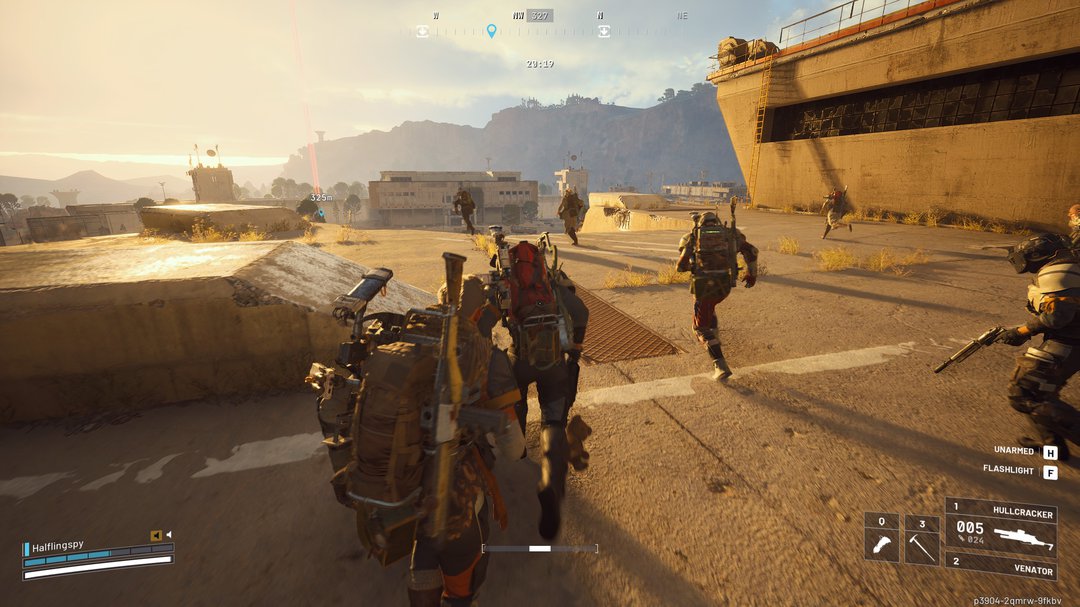
In a game where any player can choose to turn on you for selfish gain, the moments where it feels like the entire server comes together to defeat a common enemy feel special and earned.
I had a game where I got hit after taking a risk entirely alone. I crawled into a field, seconds from death, and called out that someone could come get my stuff. Suddenly, two dudes who I assume were from the Czech republic had come across the map after seeing my flare to get me back on my feet. A few minutes later, I was using my own gear reviving someone from France, and as a unified group cleared a whole field.
The odds in this challenge event really did feel impossible when I first started. They still do, when you see how many robots are flying over the objective. Then you see a dozen different people calling shots and dropping firepower and trading spoils to make sure everyone gets a piece, and - as silly as it sounds - this video game all about choosing who to trust restores your faith in humanity, at least for a little while.
Enjoying The Struggle Together
It feels weird to write all of this out, but I just can’t get it out of my head. The sense of collective hope and unity I felt watching the Artemis II mission, knowing so many other people were watching it around the world. Knowing that those four astronauts had teams of support waiting back home to make sure they were safe, that they had millions of viewers hoping for their success not just because they were fans, but because what they did was only possible due to the collective workings of humanity.
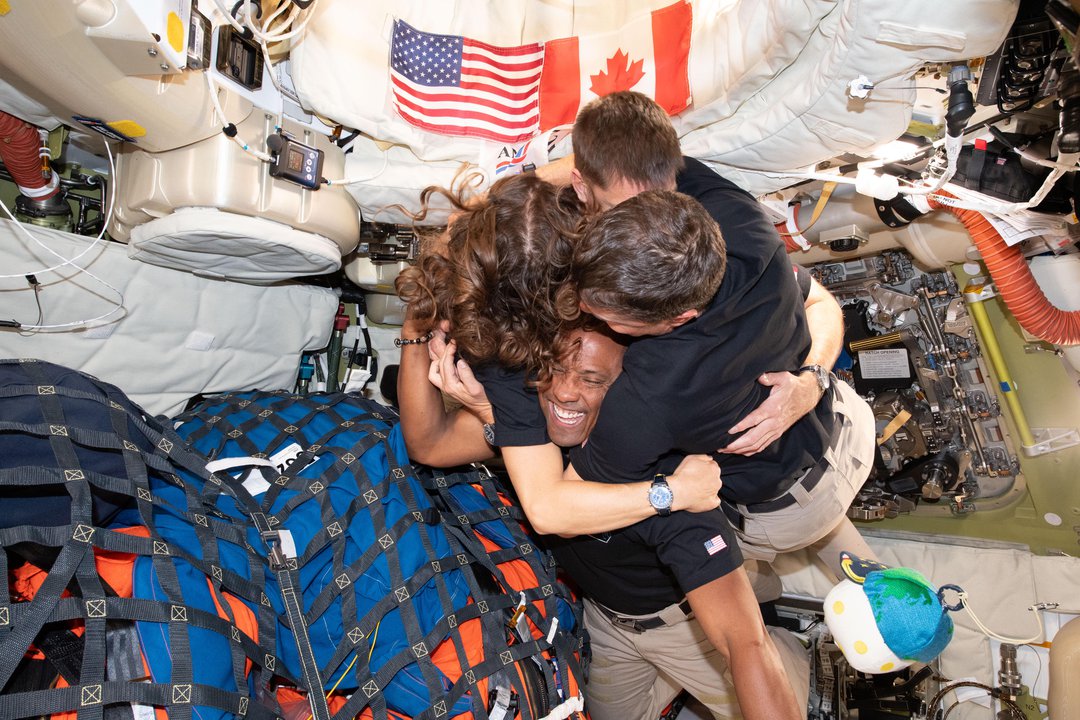
The hugs the four astronauts shared felt like a gift for all - they were only possible because of countless ground crew, technicians, and scientists supporting the mission.
It felt like a rare thing; a brief moment when the sun breaks through the clouds during a hurricane. Yet, we can make those moments happen here back on earth. We can seek them out and create them. Sure, they aren’t as grand as a mission to another planet, but it’s like exercising a muscle, finding solidarity in the joy and hope of what we can do together.
Raise money for a local charity with friends. Volunteer to help at a local community festival, or just say hello or good morning when you are out at a grocery store. And to bring this full circle back to gaming, play a game where you help others to succeed just as much as your own. It’s why TTRPGs I think will always stand the test of time; it’s collaborative storytelling, not duelling for dominance. How great it is that I can meet up with friends I haven’t seen in years and say, “Hey, remember when we all fought that lich back in college?” and feel how the mood shifts to that sense of collaboration.
7 Days To Die, no matter your opinion about the game itself, it can be a lot of fun with friends. The more players, the more zombies, the faster the game scales up. You survive by making sure there’s enough food for everyone, that while you put all of your points into medical and cooking, someone else out there is becoming really good at building traps and turrets. I’ve been playing with 6 other players which creates absolute chaos, and ironically some of the most chill evenings I’ve had in 2026. You see, we made it to the desert, an absolute hellscape with bee-spitting zombies and awful terrain. So, we joked about building a tunnel to get to the next area rather than dealing with trouble above ground. Some of my friends didn’t take it as a joke.
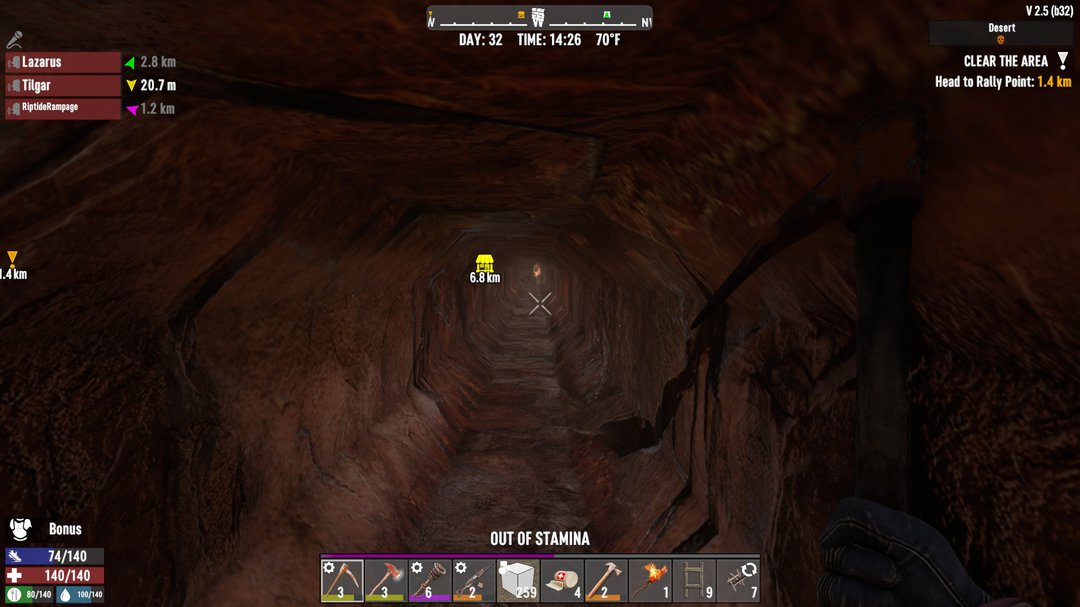
It's such a silly thing. Absolutely unnecessary. And we're still laughing about it months later.
Fast forward to 2 am that night. We all should be in bed. Instead, we’ve dug two kilometers in a straight line. We’ve been laughing about how we’re going to make it a highway, an actual functioning hyperloop, and we’ve now become delirious. Me and at least three other exhausted dads go silent for minutes at a time, chipping away at the rock, until one of us deliriously starts singing “Diggy Diggy Hole”, and we all join in, just like we have for our kids so many times before. We talk about our frustrations as parents, at our health, at our struggles. I got to sleep exhausted, but smiling. It was a stupid project, yes, but it was one we did for ourselves, and one that we did together.
One last example: I’ve been playing Planet Crafters again. It’s probably the best chance I have of experiencing space; set on a dead planet, it is up to you to try and start terraforming it into a livable environment. It's essentially a huge ‘numbers go up’ game, but it's for greening a planet instead of mining one into oblivion, a real feel good chill ‘dad’ game of automation and building. I’ve beaten it before solo, had a great time, but I’m currently playing back through it with two friends. We talk about our day, we laugh about how life is going, and… yes, we talked about the Artemis II mission.
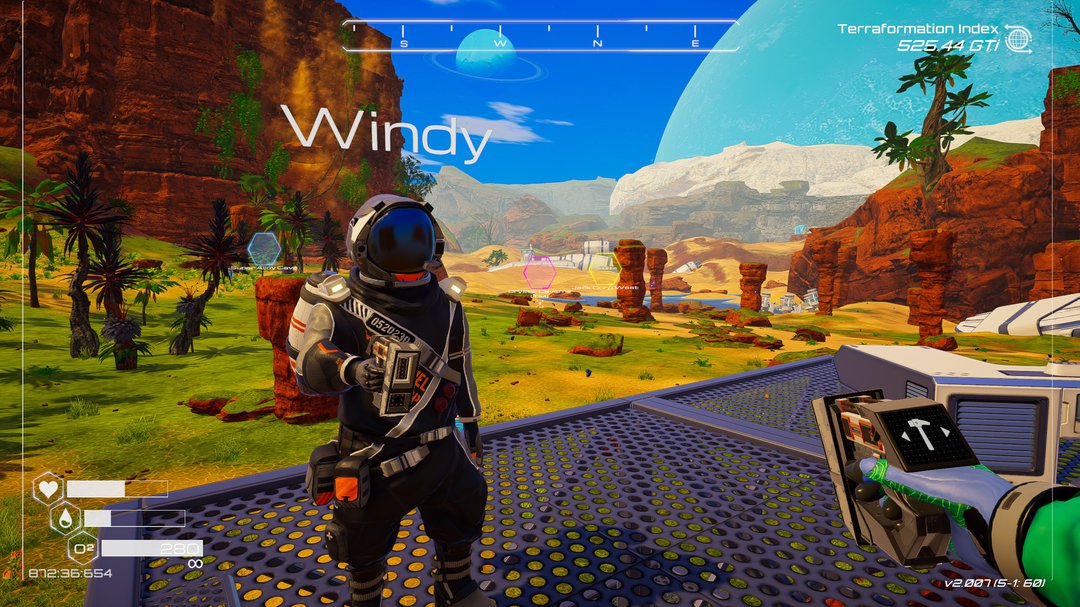
Knowing that 15 in-game hours before this picture, this entire area was dead sand and space wrecks gives you a warm fuzzy feeling. Especially when collaborating with friends.
It’s when I realized that some of the best moments of camaraderie I’ve had lately have come from games. Not by working on projects for a job or doom-scrolling on social media, but by performing an action, however small, to exercise that mental muscle of collaboration. Games can absolutely be a great escape, but they can also give us more than that if we push aside the trolling and the hate and the rage-baiting and actually work together.
Only by working together are we going to find a sense of community. Only by working together can we shoot for the moon and actually get there.
